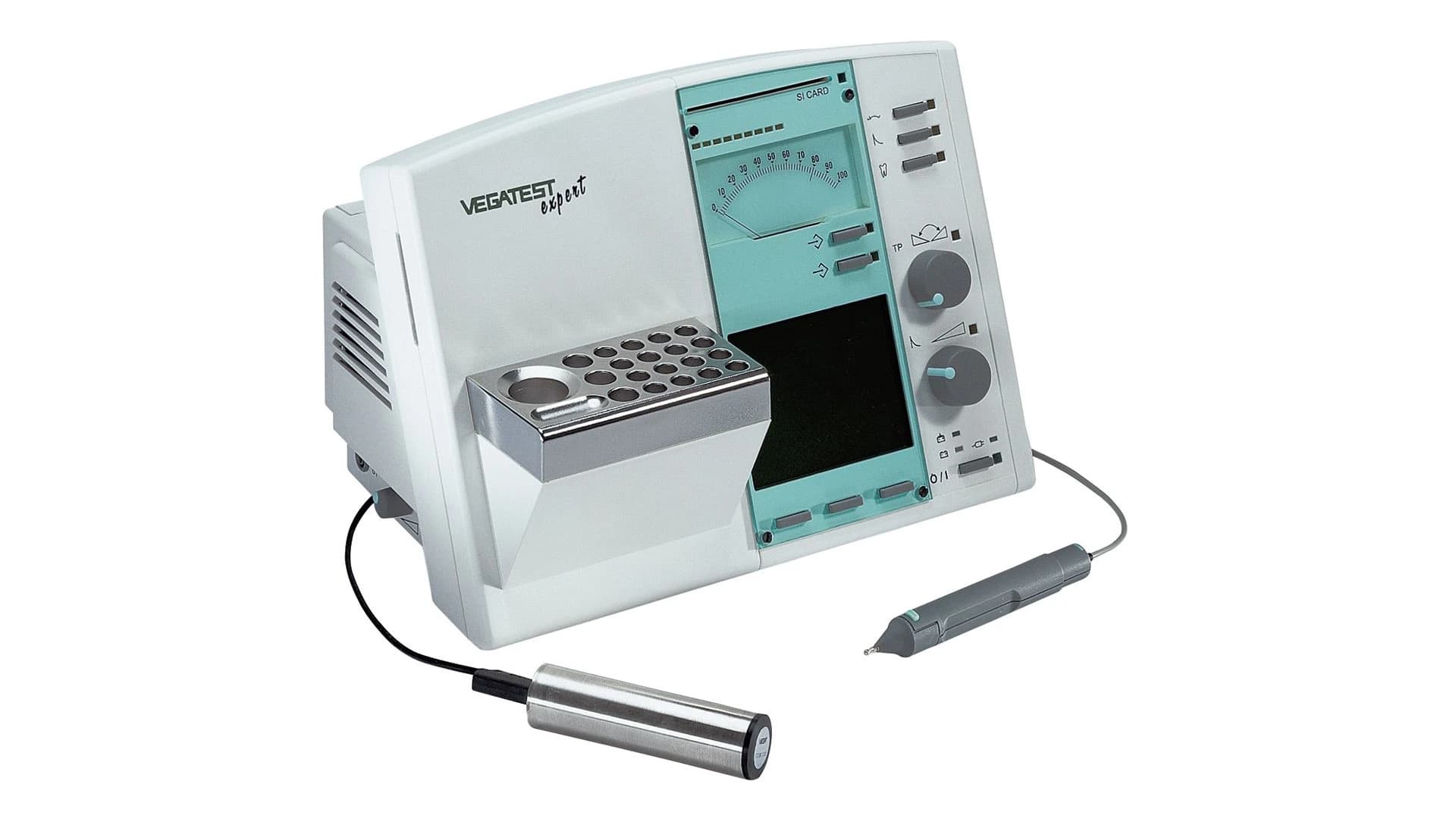
Vega Testing
Advanced Bioenergetic Assessment
Bioresonance is based on the scientifically proven principle of Quantum Physics, according to which the cells of our body emit and receive electromagnetic signals. In our body there are different forms of energy, such as electromagnetic energy, which is expressed through oscillations (frequencies). The Bioresonance method is a system that has begun to develop worldwide among doctors and other health professionals. The Vega-expert method performs electrodermal measurements of the energy and functionality of the organism as well as specific organs and body systems. The Vega test is a preventive examination that falls within alternative – complementary medicine.
How does the Vega-expert method work?
The Vega check (VRT) method is a device for measuring the general condition of the body. It was developed by the German physician Dr. Voll Reinhard in 1970. The origin of the Vega test comes from electro-acupuncture according to Dr. Voll, who was the inventor of electro-acupuncture. The Vega consists of a small, metallic platform with cylindrical holes. In each opening a small ampoule of the medicine or food to be tested is placed. This metal plate is connected to the VEGA system. Researchers have discovered that any substance placed on the metal platform becomes part of the active circuit of the VEGA machine. When the practitioner first touches with the probe the specific acupuncture points for energy analysis, they are synchronized with the metal component, in order to examine the conditions of a specific meridian. Once the initial electrical measurements have been taken, the absolute microvoltage level on the meter shows whether there is balance or imbalance at the specific points. If a point is not in balance, the practitioner can place various homeopathic preparations on the electrical plate to observe the changes in the electrical charge. Each substance placed on the metal platform becomes part of the circuit.
What can the Vega device show?
• Discovery of pathophysiological processes that escape standard clinical examination.
• Determination of the presence of focal infections.
• Determination of subclinical infections.
• Pathological conditions in different quadrants of the body.
• Energetic and functional status of various organs.
• Status of the immune system and immune-related tissues (spleen, thymus, etc.).
• Food intolerances.
• Overall health status.
• Emotional stress and disorders.
• Revelation of possible side effects and allergic reactions.